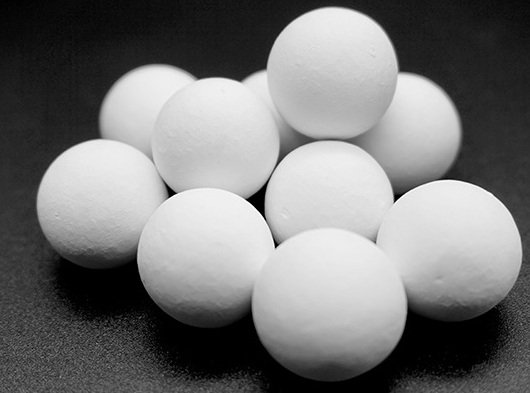
alumina balls
January 13, 2024 - Reading time: 7 minutes
Advantages of Alumina Ceramic Balls
Alumina balls are spherical in shape and boast various functional advantages, including their chemical inertness, resistance to high temperatures and mechanical strength. High alumina support media from 99% pure is designed with low silica content for use in steam applications where leached silica may coat downstream equipment or foul the catalyst bed.
Chemical Inertness
Alumina ceramic balls' chemical inertness makes them suitable as catalyst covering and packing material in reaction vessels and tower packing for petroleum, natural gas and chemical fertilizer production industries. Alumina ceramic balls also function well for applications involving gas adsorption/separation as they can withstand corrosion from acids/alkali/organic solvents as well as high temperatures/pressures without becoming damaged.
Alumina balls are also highly resistant to thermal shock, an essential factor in their suitability as catalyst support materials. Alumina ceramics achieve this resistance due to the inclusion of aluminum oxide which has a higher melting point than steel; consequently allowing alumina ceramics to withstand thermal shock for extended periods.
Inert alumina ceramic ball is used extensively as the packing material in reactors and towers in industries like petrochemical, oil refinery, natural gas production, chemical fertilizer production and environmental protection. This is due to its superior characteristics of high temperature resistance and pressure resistance as well as low water absorption rate, stable chemical performance and resistance against acid and alkali reactions as well as organic solvent corrosion.
These inert alumina balls are produced from extremely high-grade chemical-porcelain clay materials through an advanced calcination process in tunnel and rotary kilns, yielding Mohs hardness 9 ceramic balls with outstanding wear resistance that have no swelling, powdering or cracking characteristics. Furthermore, they offer exceptional resistance against abrasion and erosion.
Alumina ceramic ball come in many shapes, sizes and grades to meet different application needs. Their pore size can be tailored according to individual applications for maximum versatility. Aluminosilicate inert balls are particularly well suited to prevent silica leaching during steam reforming in gas production as well as prevent clogging of catalyst beds in other industrial settings. Inert alumina balls also make excellent choices for various catalytic reactions used to produce petroleum products like gasoline as well as produce ethylene propylene and styrene. Finally they're used oxidation of iron/nickel and purification of sulphuric acid to produce products such as gasoline!
High Temperature Resistance
Alumina balls' high temperature resistance makes them the ideal ceramic material for applications involving friction and pressure, such as metal melting and casting, industrial gas turbines, and many other pieces of equipment that utilize high temperatures or harsh chemicals. Their strong resistance to wear & tear and other structural changes helps extend their lifespan by decreasing replacements due to broken or damaged parts - further cutting costs by decreasing downtime related replacement needs.
Thermal shock resistance of alumina ceramic balls is crucial in applications that must withstand sudden and extreme changes in temperature settings, but is unaffected by them due to being designed specifically to withstand various extreme temperatures. This feature sets apart this material from others which might disintegrate or degrade in such environments.
Alumina's inert nature means it does not react with chemicals used, making it ideal for hydrocarbon processes that often take place under extreme heat settings.
When selecting an alumina ceramic ball material for your application, three key factors should be taken into consideration: its purity, mechanical strength and chemical inertness. High purity alumina ensures optimal chemical stability within processes or reactions that you entrust it with, while its superior mechanical strength guarantees these ceramic spheres can withstand heavy pressure without cracking under wear and tear.
Manufacturing Alumina Ceramics involves selecting and shaping high-grade alumina powder into the desired form before pressing and sintering at high temperatures to achieve the hardness required. A variety of diameters is available from 0.5mm to 100mm for your specific requirements and you can modify their wall thickness for increased resistance to chemical wear/tear, heat as well as lightweightness.
Mechanical Strength
Steel balls wear down quickly in high-speed applications, while alumina ceramics last several times longer due to their resistance against corrosion, oxidation, thermal shock, and other environmental hazards. As such they're an excellent choice for use in harsh industrial environments while remaining less expensive than their metal counterparts.
Cold isostatic pressing (CIP) provides an effective solution by applying pressure from multiple directions rather than one point of contact, thus improving compaction uniformity and expanding forming capabilities of alumina powders.
Alumina grinding/milling balls are essential tools in the production of ceramics, minerals, electronic materials, coatings and paints. They serve as an excellent replacement for natural flint or pebbles which wear down quickly while potentially introducing contaminants into milling systems; in addition, these balls are much lighter and harder than steel making them much more cost-effective over time.
These balls are built to withstand thermal shock, withstanding temperatures up to 1600degC without showing signs of thermal shock or mechanical fatigue. Furthermore, their non-magnetic construction helps avoid interference with electrical fields, while they withstand chemical exposure such as acids, salts, alkalis, organic solvents as well as having low abrasion rates and nonporous surfaces - another key benefit!
As part of dismounting ceramic femoral components from metal trunnion bores, gray metallic bands may transfer onto the trunnion and impair weight trending accuracy while potentially misinterpreting trunnion bore wear rates as being greater than normal - leading to misdiagnosis, inappropriate therapy or failed surgery procedures.
Alumina balls are an innovative support media ideal for use in reactor and tower packing applications, featuring increased crush strength and survivability as well as supporting active catalysts with low strength. Their chemical stability and resistance to thermal shock make them suitable for petroleum, chemical fertilizer, natural gas, and other chemical industries.
Versatility
Alumina balls are extremely versatile, and can be found in numerous industrial applications. Their ability to withstand high temperatures while remaining corrosion-resistant makes them suitable for various forms of damage as well as being highly durable with an impressive strength-to-weight ratio making them great for grinding applications and more. Their reasonable pricing makes alumina ceramic balls an affordable choice that's suitable for virtually every industrial need.
Activated alumina balls are commonly employed as an adsorbent and catalyst, particularly during polyester manufacturing processes, where moisture absorption prevents production interruption and hydrogen peroxide production from taking place. Furthermore, activated alumina balls may be found in energy transformers, air dryers and dehumidifiers to absorb moisture from oil that powers machines.
alumina ceramic balls are extremely flexible industrial tools, used in applications ranging from grinding and polishing, wear resistance and corrosion protection to thermal shock resistance. Made from Al2O3 metal oxide material and with hardness greater than steel density they offer resistance against hydrochloric and hydrofluoric acids as well as strong alkalis as well as thermal shock.
Ceramic alumina balls are widely used in ball mills to transform raw materials into fine particles for use in alumina grinding applications, providing an efficient alternative to traditional ball stones which can damage both the environment and equipment. Ceramic alumina grinding balls also boast greater resistance against wear-and-tear and are less expensive than other forms of abrasive media.
alumina balls can be found in ball mills to mix and grind ceramic raw materials and glaze materials into a consistent slurry, while also helping reduce temperature, power consumption and increase efficiency in ball milling operations. They can be purchased from Morbi ceramic tile factories with 40 and 60 ton capacities at very reasonable prices and they're extremely long-wearing.